
The Pitfalls of Base Conditions on Metal Buildings
Whenever I hear the term “pitfall,” I’m reminded of the 1980s video game where the hero swings over open alligator mouths, narrowly avoiding danger. While the base condition of a metal building may seem straightforward, it can present similar hidden hazards if not carefully addressed.
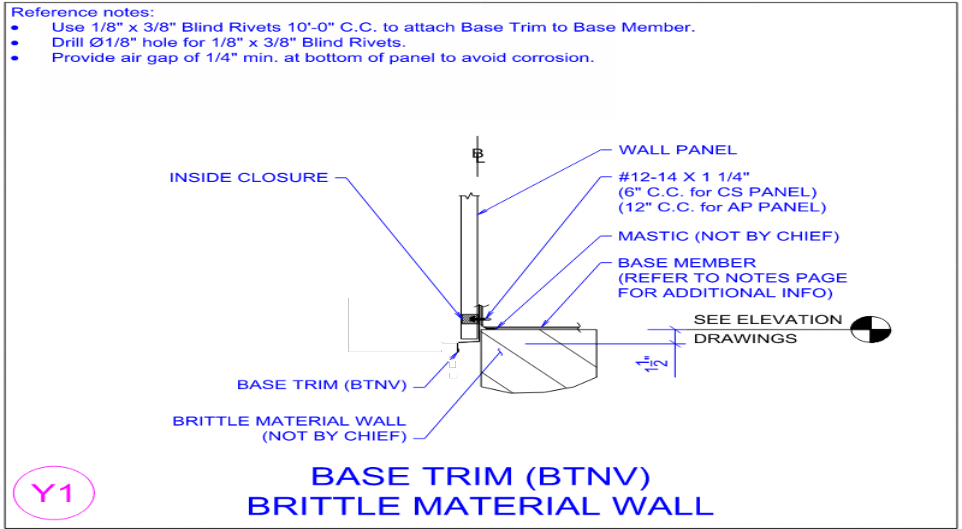
One common issue involves the need for a simple, minimal-height curb wall within the girt cavity. This detail is directly related to the final elevation of the perimeter siding, which typically extends 1½ inches below the base elevation. If the base elevation is set at finished floor height, the siding ends up extending below the finished floor. This becomes problematic at perimeter openings such as man doors or overhead doors. At these locations, a concrete pad is often poured tight against the building. When the siding extends below the slab, it can become encased in concrete, effectively trapping the metal in a “concrete pocket.” Over time, this condition promotes moisture retention and leads to corrosion and premature failure at the base of the wall. Addressing this small detail during design and construction can help avoid a costly pitfall down the road.
Framed Openings
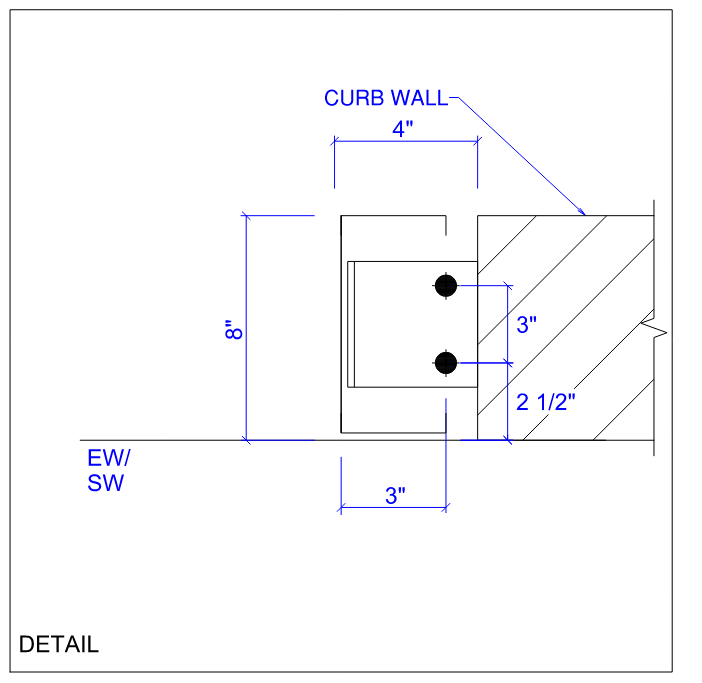
Another potential issue arises at the base condition of framed openings when a perimeter curb wall is present. The typical pre-engineered metal building (PEMB) approach extends the jamb through the curb wall to the finished floor elevation, requiring the curb wall to terminate short of the opening.
This default configuration introduces several construction and sequencing challenges. Most notably, a concrete slab-on-grade is typically required to provide a bearing and attachment surface for the jamb base. Additionally, the curb wall installation is deferred until after the jambs are erected, resulting in inefficiencies in construction sequencing and coordination.
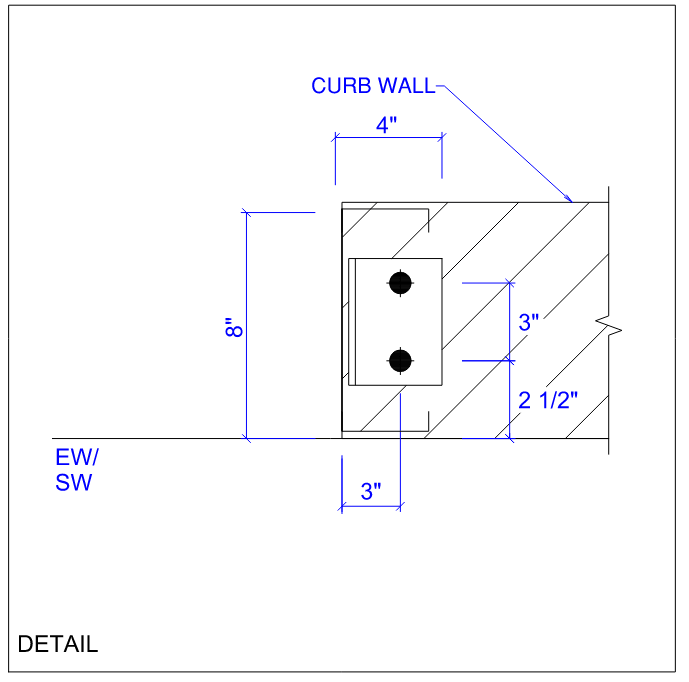
An alternative approach is to construct the perimeter curb wall prior to erection of the framed opening and subsequently anchor the jambs to the top of the curb wall. Under this configuration, the curb wall must be designed with sufficient structural capacity and reinforcing to resist the vertical and lateral loads transferred from the jambs, including wind-induced forces, as the load path is terminated at the top of the wall rather than extending to the finished floor elevation.
As illustrated by the two approaches described above, framed openings at perimeter curb wall conditions require a high level of coordination and pre-planning regardless of the selected detailing strategy. Each option carries distinct structural and construction sequencing implications that must be evaluated during design. As noted in Part 1 of this series, proactively addressing these conditions in the design phase will mitigate potential sequencing conflicts and constructability issues during construction.
Base Trim at Masonry - Single with Split Face
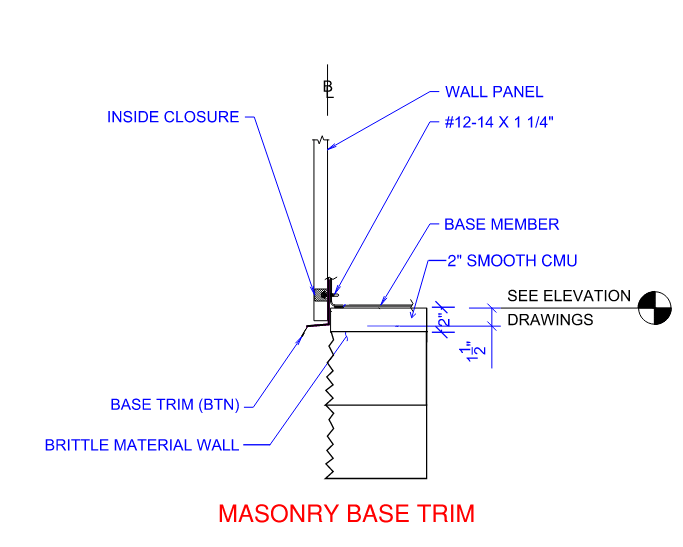
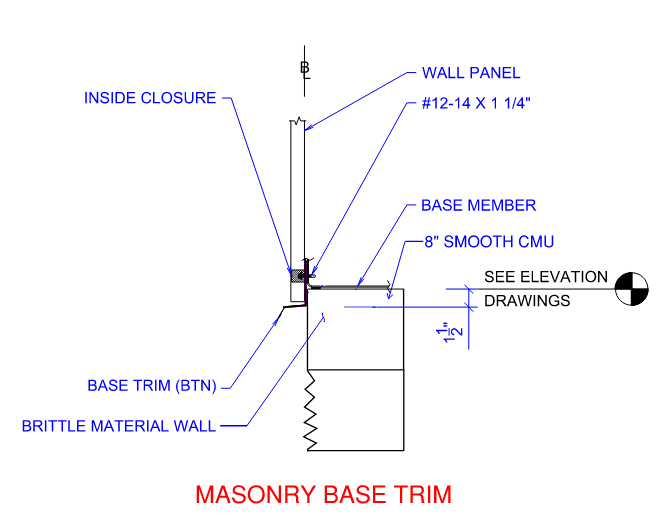
The base trim condition at a split face masonry wainscoat can be another “pitfall” to avoid with some simple early project planning. Since the typical base trim condition extends down past the top of the masonry by 1 ½”, the uneven face of the split face will prevent the base trim from resting against a smooth surface. A solution to this issue would be to have the top masonry block be a smooth colored, instead of rough split face. If the Owner or designer does like this look, they may want to reduce the height of this top block to a 1/2 (4” tall) or even ¼ (2” tall) cap block. This may effect the coursing, but again this can be resolved with some simple early planning.
Base Trim at Masonry – Double Wythe Masonry Walls
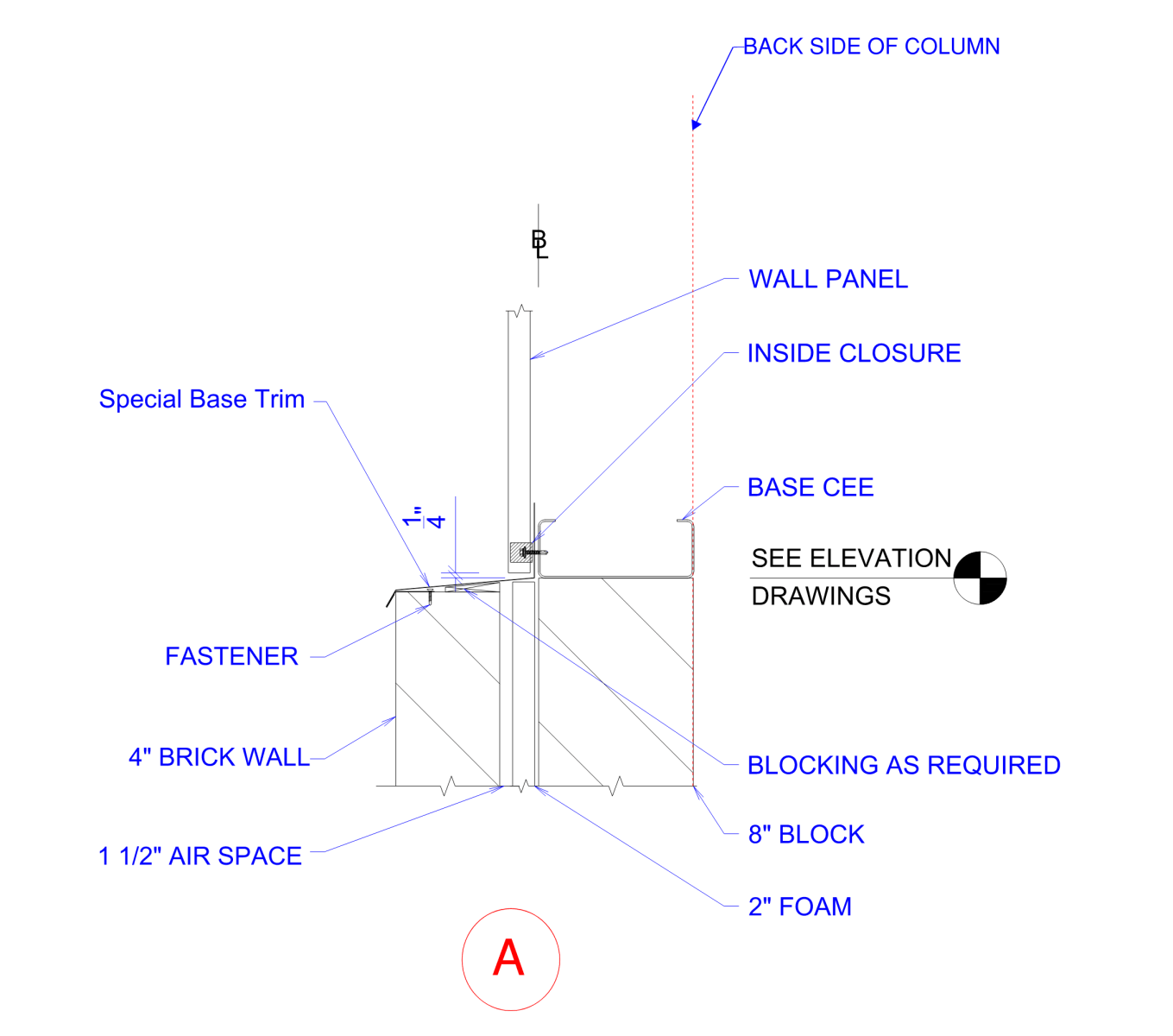
Due to the recent changes in energy codes around the country, the double wall masonry is becoming almost a requirement in metal buildings with masonry wainscot conditions. The current “pitfall” is with detail A as shown below, which projects the base flashing over the masonry, which is almost impossible to make “water” tight condition. When water accumulates at this flashing and gets behind the masonry veneer, it creates a condition that turns the weeps holes, at the base of the masonry, into “mini downspouts” removing this moisture. The following are the issues with the assembly detail A.
1) Both layers of double wall masonry walls are almost always the same elevation (can't slope trim, since no elevation difference)
2) Sloped blocking under trim is never “picked up” in any scope and never installed (not mason, carpenter or metal building erector scope)
3) Lapping of base flashing at this condition is almost never water tight, lapped flashing only.
4) Face of foundation does not match face of steel and causes confusion during construction
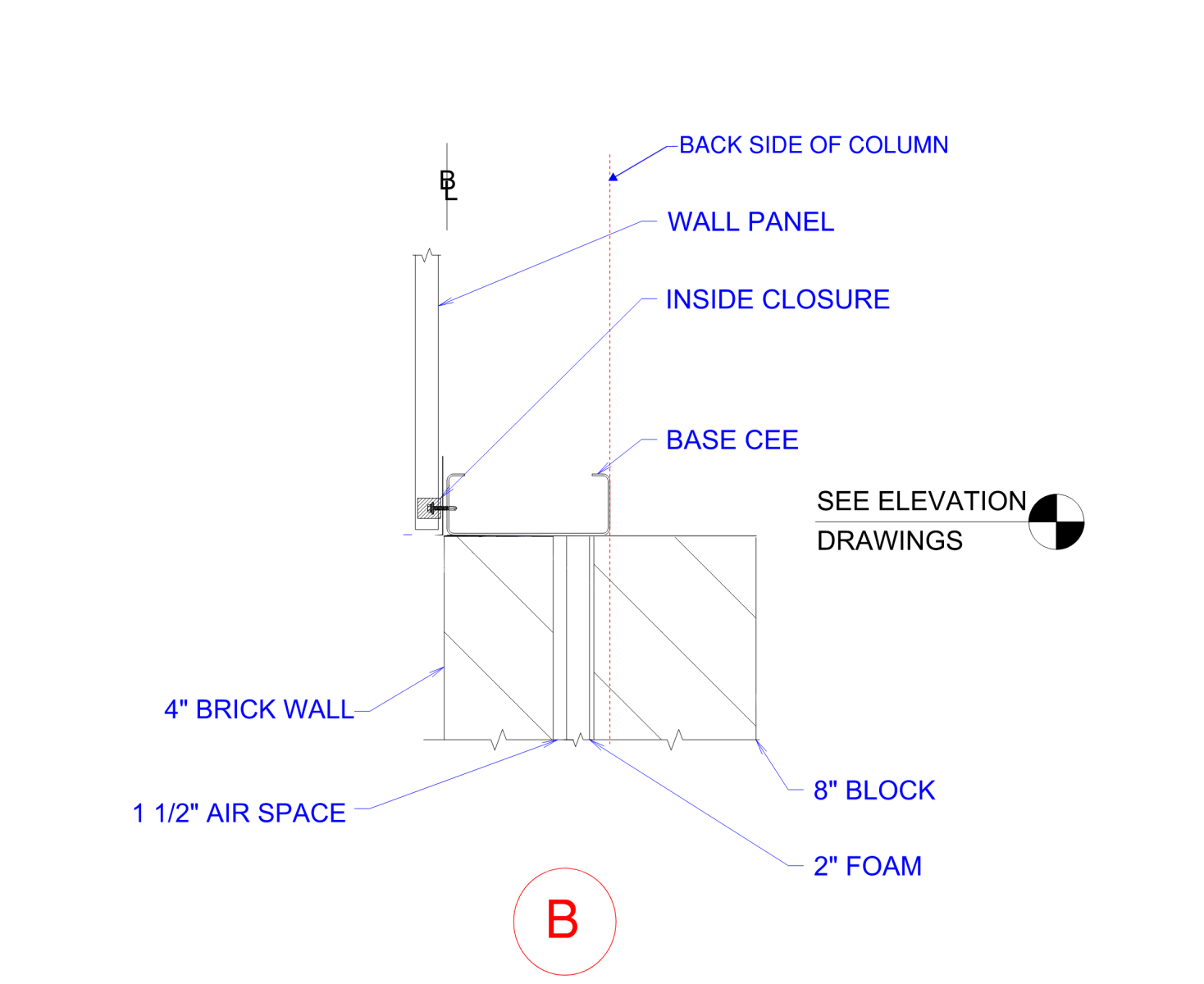
A simple solution (detail B) has been developed that required a little forethought, is to move the supporting masonry between the metal building columns which then allows the face veneer brick to line up with the outside of the steel line. The inside masonry wall is not as “clean” when it stops and starts into the side of a mainframe, but this simple solution resolves a long term exterior water condition.
Learn more about MBCEA membership and read additional best practice articles.